Cost. Weight. Flexibility. Conventional solar forces a trade-off. We removed it.
Today's Options
III-V solar cells cost $40–$170 per watt
Silicon can't meet performance requirements
Weight and rigidity limit key markets
Aging installations are costly to replace
Our Solution
Flexible nanowire III-V solar membranes at silicon-class cost
~80% less in rare material consumption
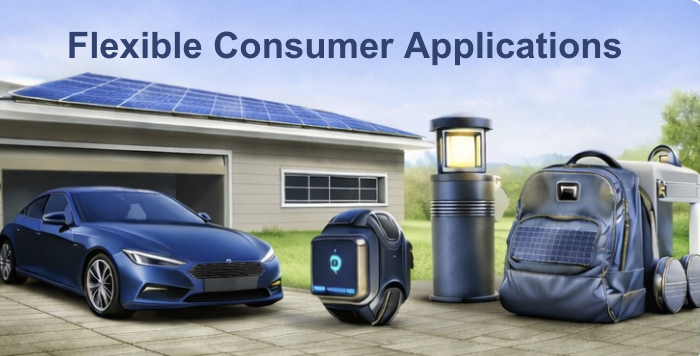
Conforms to any surface, rigid or curved
Tape-on deployment for fast integration
What we deliver
Advantages no one else can match
Kamo Nano’s patented nanowire platform delivers a combination of capabilities no conventional solar technology can match, across performance, durability, sustainability, and design flexibility.
Unmatched Power-to-Weight Ratio
Projected ~1 kW/kg, a 10× improvement over the industry standard of 0.1–0.3 kW/kg for commercial and flight-proven spacecraft systems.
10×
power-to-weight ratio over other flight-proven systems
Exceptional Radiation Tolerance
Up to 40× greater radiation tolerance vs. standard cells, enabling long-life LEO deployment.
40×
vs. standard cells
Flexible & Transparent Membranes
Bend, flex, and conform to curved structures, vehicle surfaces, windows, and more.
Any
surface, rigid or curved
Smarter, Sustainable Manufacturing
Growth of III-V materials on silicon substrates enables indefinite substrate reuse and ~80% less epitaxial material vs. traditional III-V manufacturing.
~80%
less rare material
Unmatched Power-to-Weight Ratio
Projected to deliver over 10 kW/kg — ideal for wearables, drones, and satellite arrays.
>10 kW/kg
Projected power-to-weight ratio
Exceptional Radiation Tolerance
Up to 40× greater radiation tolerance vs. standard cells — enabling long-life LEO deployment.
40×
Greater radiation tolerance
Flexible & Transparent Membranes
Bend, flex, and conform to curved structures, vehicle surfaces, windows, and more.
Any Surface
Flexible, conformable solar integration
Near-Total Recyclability
Substrate reuse and dramatically reduced rare earth material consumption vs. traditional III-V manufacturing.
~80%
Reduction in rare material consumption
Where It Works
Three markets the rest of the
industry can't reach
One platform, three deployments where conventional silicon and III-V simply don’t fit.
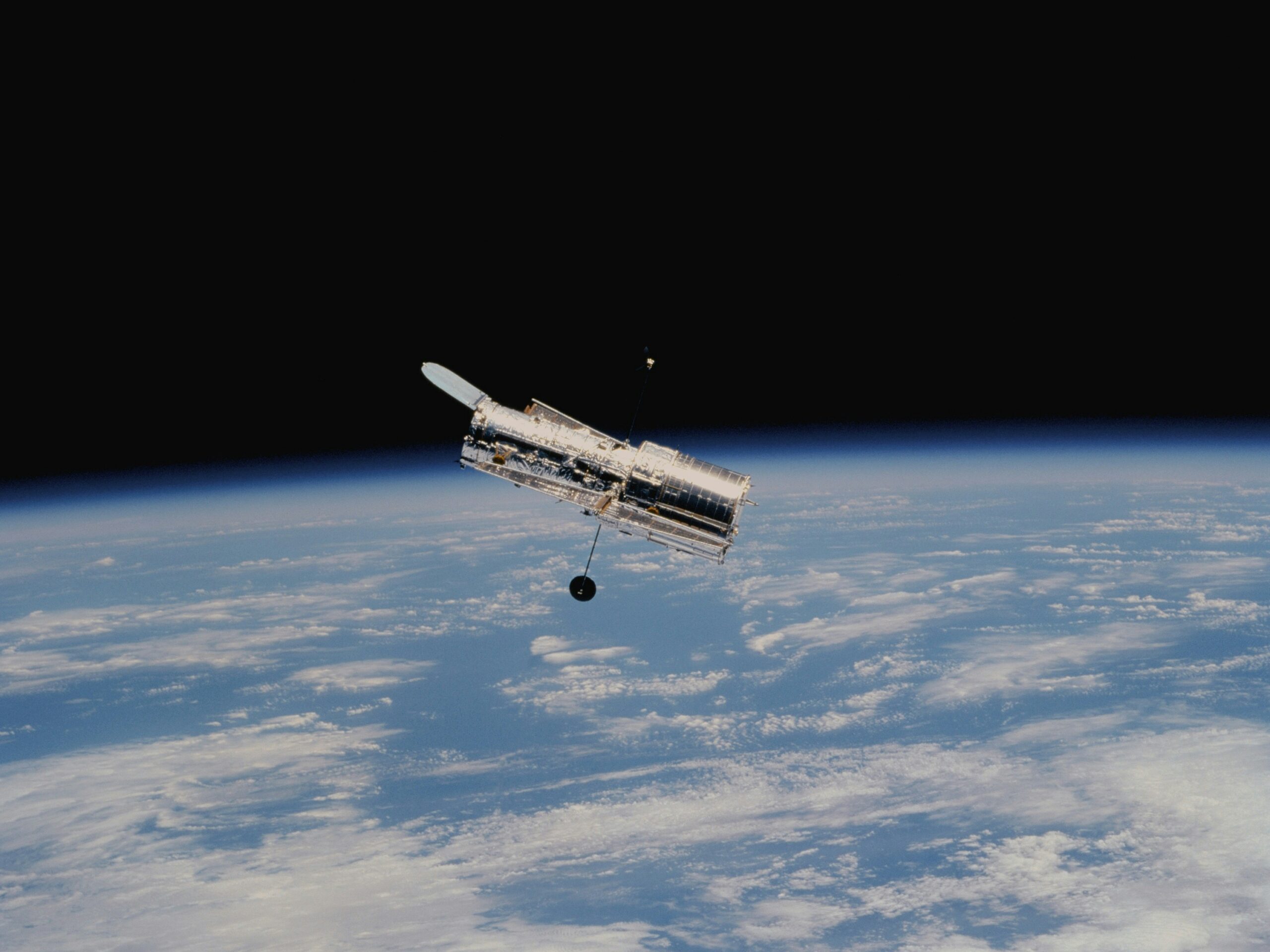
01 Space & Satellite
40-year arrays in low Earth orbit
10× the orbital lifetime of standard cells, turning a 4-year asset into a 40-year one.
What if Rochester's skyline paid its own power bill?
We’re modeling Kamo Nano membrane retrofits on Rochester’s most recognizable buildings, starting with the Xerox Tower, to show that a semi-transparent BIPV film can turn every south-facing pane into a generator, without touching the architecture.
~62%
Of daytime base-load offset, modeled for a 28-story office tower
<1%
Visible change to façade aesthetics or daylight transmission
KNS uses patented nanowire technology to produce high-efficiency, lightweight, flexible, and low-cost solar membranes. The company commercializes through an asset-light IP licensing model — partnering with established manufacturers to scale without heavy capital expenditure.
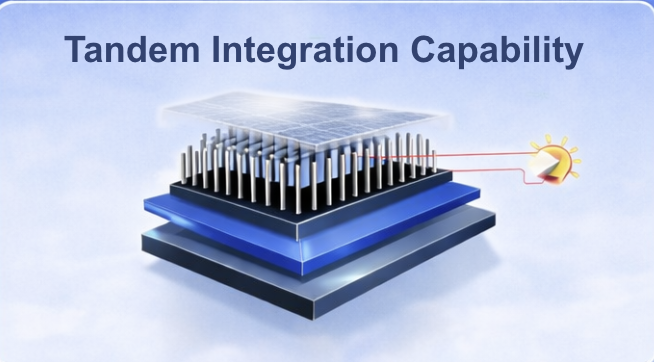
Our patented nanowire platform pairs a novel material architecture with a thin-film process — together they unlock performance ratios that conventional cells can’t approach.
Vertical nanowire architecture
Single-crystal III-V nanowires grown directly on a flexible substrate, replacing thick bulk wafers. Higher absorption per gram of material, radically reduced rare-earth footprint, and intrinsic strain relief for radiation tolerance.
Rolled, peel-and-stick membrane format — applies in minutes to drones, vehicles, façades, satellite buses, and existing arrays. No glass, no aluminum frame, no specialized installer.